
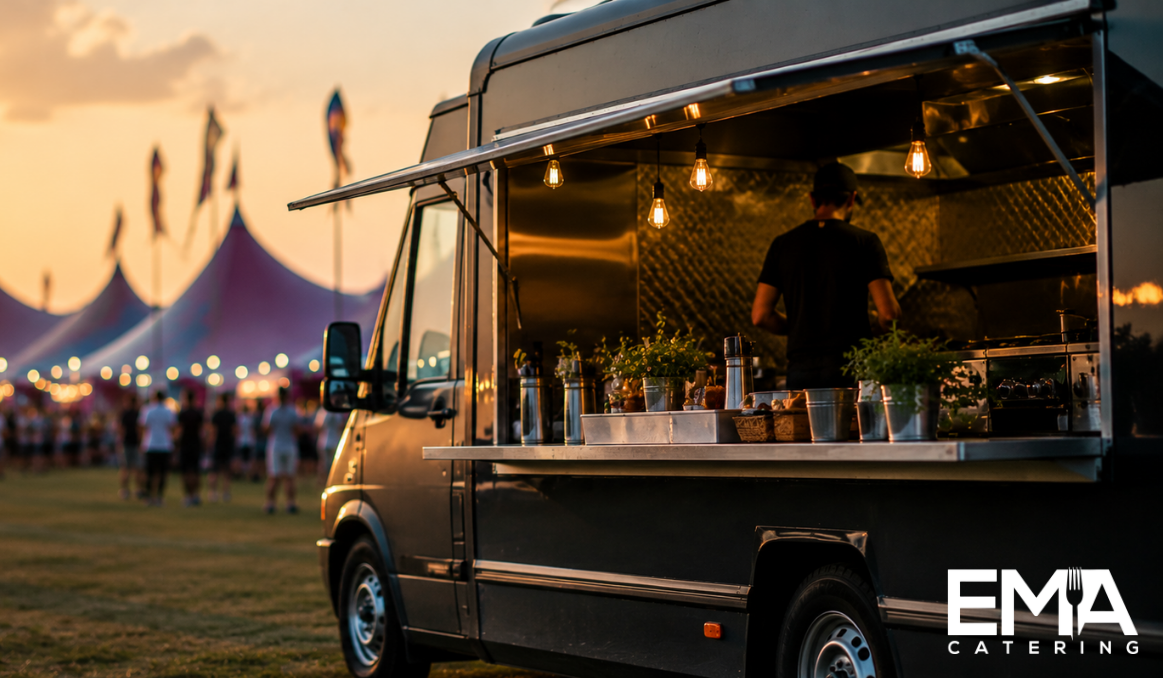
Booking a food truck sounds simple until you are the one doing it. Suddenly there are pitch fees, power requirements, insurance certificates, hygiene ratings and a contract that needs to actually protect your event. We have stood on both sides of this, as the vendor being booked and as the people helping organisers get it right, so here is the honest, step-by-step guide to booking mobile catering for festivals in the UK without the nasty surprises that catch first-time organisers out.
Start early, and start with your event, not the menu
The single biggest mistake is leaving it late. Good festival vendors get booked months ahead for popular summer dates, and a rushed booking gives you no time to check credentials or plan logistics. Before you contact anyone, get clear on the basics of your event, because every caterer will ask, and having the answers ready makes you look organised and gets you better quotes.
| What to know first | Why the caterer needs it | Rough detail to prepare |
|---|---|---|
| Date and times | Availability and staffing | Day, set-up window, trading hours |
| Expected footfall | Capacity and number of units | Realistic peak crowd numbers |
| Site and access | Vehicle access, pitch size, ground | Location, surface, gate times |
| Power and water | Whether the site is off-grid | What you can supply, what they must bring |
| Audience and vibe | Menu fit and pricing | Family event, music festival, food focus |
The booking process, step by step
Booking a festival food truck follows a fairly consistent path. Knowing the stages helps you keep control of the timeline rather than scrambling at the end.
1. Shortlist and check credentials
Find vendors who suit your audience, then check the things that matter before you fall for the food. Every food business in the UK must register with its local authority, and you can look up any vendor’s Food Hygiene Rating on the FSA rating search. Confirm they hold public liability insurance, since most festivals require it before a vendor sets foot on site.
2. Request quotes and compare like for like
Ask each vendor for a clear quote that states exactly what is included: the units, the staff, the menu, set-up and pack-down, and any extras. Vendors charge in different ways, so make sure you are comparing the same things rather than just the headline number.
3. Agree the commercial model
This is where festival catering differs from a private booking. There are several common arrangements for mobile catering for festivals, and the right one depends on your event size and who carries the risk.
| Commercial model | How it works | Best when |
|---|---|---|
| Fixed pitch fee | Vendor pays you to trade; keeps their takings | Established events with strong, reliable footfall |
| Percentage of takings | You take a share of vendor sales | You want upside and can handle reporting |
| Flat hire fee | You pay the vendor to attend and serve | Private or corporate-style events, guaranteed service |
| Hybrid | Reduced pitch fee plus a share of sales | Newer events sharing risk with vendors |
4. Put it in writing
Never run on a handshake. A simple written agreement protects both sides and prevents the day-of disputes that sour events. We will cover what to include next, because this is the part organisers most often skip and most often regret.
What to put in the contract
A good festival vendor agreement does not need to be a legal epic, but it must be clear. These are the points worth nailing down in writing before anyone arrives on site.
The essentials: the date and trading hours, the exact pitch and size, the commercial model and payment terms, arrival and pack-down times, and confirmation of the vendor’s hygiene rating and public liability insurance. Spell out who supplies power, water and waste, because “I assumed you had that” is the most common cause of a bad festival morning. Also agree what happens if the event is cancelled or the weather turns, so neither side is left guessing.
Do not forget food safety duties. Vendors must comply with food hygiene law and allergen rules, including labelling requirements under Natasha’s Law, as set out in the FSA allergen guidance. Stating this in the agreement makes expectations clear and protects your event’s reputation.
Logistics: the part that makes or breaks the day
Most festival catering problems are logistical, not culinary. The food is usually fine; it is the power, the access and the timing that go wrong. When you book, agree the practical details as carefully as the menu.
Power and water top the list. Many festival sites are off-grid, so confirm whether the vendor brings their own generator or solar power, or whether you are providing hook-ups. Get the access timings right too: when can vehicles enter, where do they park, and how firm is the ground if it rains? A vendor with real festival experience will ask these questions before you do, which is itself a good sign you have booked the right one.
Case study: filling a festival’s food offer at six weeks’ notice
Here is one from our own experience, lightly anonymised, that shows how a well-run booking comes together even under time pressure.
A regional summer festival contacted us six weeks out after a previous arrangement fell through, leaving a hole in their food offer for an expected crowd of several thousand a day. Tight, but workable, because we have done this many times. We started with their event details rather than our menu: footfall, site access, power, and the audience, a family-friendly crowd who wanted recognisable, good-value food served fast.
From there it moved quickly. We agreed a clear commercial model and a written agreement covering pitch, hours, power and pack-down within days. Because the site was partly off-grid, we confirmed our own power setup so the organisers had one less thing to arrange. On the day, our units were positioned to spread the crowd, the menu was kept tight so queues kept moving, and our team ran set-up to strike without the organisers having to manage us. The festival later told us the food had gone from being their biggest worry six weeks earlier to one of the smoothest parts of the weekend.
The lesson: a good vendor makes booking easier, not harder. If a caterer is asking you the right questions and putting things in writing without being chased, you have found a safe pair of hands.
Why organisers book EMA Catering for festivals
EMA Catering has provided mobile catering for festivals across the UK since 1995, so we make the booking process easy rather than stressful. We ask the right questions about footfall, access and power upfront, put the details in writing, and bring our own solar-powered setup so off-grid sites are never your problem.
We are a family-run business with a strong food hygiene rating, full public liability insurance and a clear allergen process. We source HMC-certified halal meat and offer vegetarian, vegan and gluten-free options as standard, and we have the capacity to keep queues moving in front of large crowds. If you want a food truck operator who turns up early, documents everything and delivers, EMA Catering is a safe pair of hands.
Questions to ask before you book
Take this list to every food truck operator you approach. The answers tell you who will turn up and deliver.
- What is your current Food Hygiene Rating, and can I see it on the FSA register?
- Can I see your public liability insurance certificate and cover level?
- How many people can you serve per hour, per unit?
- Do you bring your own power and water, or do you need hook-ups?
- What are your set-up and pack-down requirements and timings?
- What commercial model do you prefer, and what exactly is included?
- How do you handle allergens and dietary options?
- Which comparable festivals have you worked, and can you provide references?
If you would like an experienced team to fill your festival’s food offer without the stress, that is exactly what we do. You can explore our festival and event catering services, see festivals we have worked, or tell us your date, footfall and site details and we will respond within one working day.
The bottom line
Booking mobile catering for festivals comes down to starting early, checking credentials, agreeing a clear commercial model, and putting the logistics in writing. Sort the power, water, access and timings before the menu, because that is where festivals go wrong. Choose a vendor who asks you the right questions and documents the details without being chased, and the food will become the easy part of your event rather than the part that keeps you up at night.
Frequently asked questions
How far in advance should I book a food truck for a festival?
For popular summer dates, several months ahead is sensible, because good vendors book up early. Beyond securing availability, booking early gives you time to check credentials, agree a commercial model and plan logistics like power and access properly. Last-minute bookings are possible, and experienced vendors can move quickly, but the earlier you start, the more control you have over quality and the smoother the planning.
How much does it cost to book a festival food truck?
It varies with the commercial model. At established events, vendors often pay you a pitch fee to trade and keep their own takings; at others you might take a percentage of sales or pay a flat hire fee for guaranteed service. Costs also depend on footfall, units and staffing. The key is to compare quotes on a like-for-like basis and be clear which model you are agreeing, rather than just looking at a headline figure.
What insurance do festival food vendors need?
Public liability insurance is essential, and most festivals will not allow a vendor on site without it. Many events ask for a minimum cover level, often several million pounds, so check the certificate and confirm the dates align with your event. If the vendor employs staff, employers’ liability is also a legal requirement. Always see the certificates rather than taking the vendor’s word for it.
Do festival food trucks bring their own power?
Many do, but you must confirm it rather than assume. Festival sites are often off-grid, so experienced vendors usually carry their own generator or, increasingly, solar or battery power. Others will expect you to provide hook-ups. This is one of the most common causes of problems on the day, so agree clearly in writing who supplies power, water and waste before the event.
How many food trucks do I need for my festival?
It depends on your expected footfall and how spread out your site is. As a rough guide, a single unit can serve a few hundred covers across a session, so larger crowds need multiple units positioned so people never queue too long or walk too far. Ask each vendor how many covers they can serve per hour per unit, and plan capacity around your realistic peak crowd, not the average.
What should be in a festival food vendor contract?
At a minimum: the date and trading hours, the exact pitch and size, the commercial model and payment terms, arrival and pack-down times, and confirmation of the vendor’s hygiene rating and public liability insurance. Crucially, state who supplies power, water and waste, and what happens if the event is cancelled or weather disrupts it. A clear written agreement prevents the day-of disputes that can otherwise sour an event.
EMA Catering is a London family-run caterer providing mobile catering for festivals, events and corporate occasions across the UK since 1995. Get a quote.