
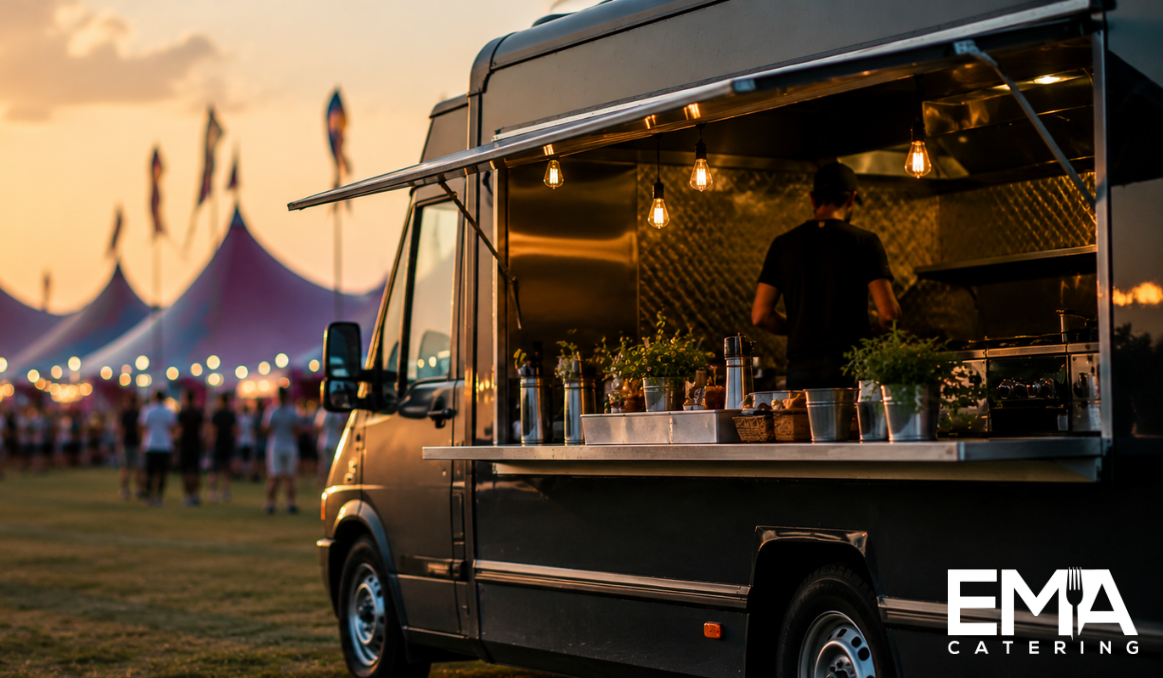
It seems so simple to set up a food truck. But the reality is that you have pitch fees to pay, it needs to be off-grid, mental insurance, and hygiene ratings, and you need a contract that covers all of the above and the caterer. Having been on both sides of the fence as the caterer you’re booking and as one of the team helping event organisers to get it right.
Start early, and start with your event, not the menu
The worst mistake is booking it all too late. Quality festival traders are booked up for popular summer periods many months in advance, and last-minute booking means you won’t have the chance to verify references or finalise your plans. Before you start making contacts, figure out the basics of your event because every trader will ask, and you’ll be more organised and find the replies easier.
The booking process, step by step
Booking a festival food truck follows a fairly consistent path. Knowing the stages helps you keep control of the timeline rather than scrambling at the end.
1. Shortlist and check credentials
Locate vendors that match your audience, then test the boxes that matter before you get hooked on the food. All food businesses in the UK are required by law to register with their local authority and you can find any vendor’s Food Hygiene Rating with the FSA rating search. Make sure they’ve got public liability insurance; many festivals insist on this before vendors are allowed to trade on site.
2. Request quotes and compare like for like
Ask each supplier to give you a transparent quote which clearly shows what is included: units, staff, menu, set-up and pack-down, and extras. Vendors will quote in different ways, so ensure you are comparing apples with apples, rather than apples with pears.
3. Agree the commercial model
There are a variety of different ways that festival caterers can operate to include your event; all have their pros and cons, and which option is best will depend on the size of your event and who bears the risk.
4. Put it in writing
Don’t work on a handshake. Just one brief contract in writing saves everyone headaches and avoids last-minute beefs that can cancel your event. Stay tuned as we discuss what to put in contracts next, because this is one area where organisers commonly leave out and regret.
What to put in the contract
Of course, an ideal festival vendor agreement does not need to be such a complex document, but all the key agreements should be covered, even before the sales pitch is made. The key issues that should be covered are trade days/time, pitch location and size, payment and business operations, delivery of banners, hygiene inspection of the stall/insurance cover, etc., and ‘Who supplies the power and water facilities?’
Always maintain food safety obligations. Vendors are required to operate in accordance with food hygiene law and allergen legislation, which include food labelling legislation (Natasha’s Law) and FSA allergen guidance. Including this in your agreement clearly states the requirement to local authority standards and helps safeguard the reputation of your event.
Logistics: the part that makes or breaks the day
Most festival catering problems aren’t actual problems with the food—it’s the power, access, and time. Discuss all those details as you plan your menu, not just when the food should be ready. Power and water are king.
If the venue is off-grid, find out if the vendor supplies their own generator or solar power and whether you’re expected to supply hook-ups.
Clarify when vehicles are allowed to come and park, and ask how solid the ground is if there’s rain. One experienced festival caterer may even ask you this before you’ve asked!
Case study: filling a festival’s food offer at six weeks’ notice
One of our experiences, now in the public domain, is slightly anonymised, and demonstrates how a good booking can be achieved on a tight timescale. Another regional summer event called us 6 weeks out, having lost a prior catering supplier, and needed to fill a gap in their food provision during a busy event for a few thousand people a day. Not impossible, because we’ve done it before. So began by looking at the event info, not our list of dishes: footfall, access, power, and demographic—a family-friendly audience expecting good, familiar, value-for-money dishes in a quick service format.
And after that, it was plain sailing. We nailed down a transparent commercial arrangement and put together our pitch, hours, power, and pack-down needs in a matter of days. Being somewhat off-grid, we assumed responsibility for our power needs and took the pressure off the event organizers.
Morale: a good vendor is not just someone who delivers you delicious food. They also take the pain out of booking them! If your caterer is asking the right questions and diarising documentation without need for relentless chasing, they are a keeper.
Why organisers book EMA Catering for festivals
EMA Catering has been delivering mobile catering for festivals all over the UK since 1995, so we know how to keep the booking process hassle-free not panicky. We find out the essential questions about footfall, access and power immediately, confirm in writing and bring our own solar powered caterers so off-grid sites are never your problem.
We are a family business with a 5-star food hygiene rating, public liability insurance, and a no-fuss allergen process. We purchase HMC-certified halal meat and are happy to cater for vegetarians, vegans, and gluten-free. We can also keep the queue moving when there are thousands of people to cater for. Whether you require an early starter, all the organiser of everything or someone who can pop in and get the job done, EMA Catering is always a safe pair of hands.
Questions to ask before you book
Take this list to every food truck operator you approach. The answers tell you who will turn up and deliver.
- What is your current Food Hygiene Rating, and can I see it on the FSA register?
- Can I see your public liability insurance certificate and cover level?
- How many people can you serve per hour, per unit?
- Do you bring your own power and water, or do you need hook-ups?
- What are your set-up and pack-down requirements and timings?
- What commercial model do you prefer, and what exactly is included?
- How do you handle allergens and dietary options?
- Which comparable festivals have you worked on, and can you provide references?
Leave your festival food planning to us! If you are happy for an experienced team to manage your festival food offer without any stress—we can! Visit our festival and event catering page, view festivals we have supplied, or let us know your date, footfall, and location, and we will get back to you within 1 working day.
The bottom line
Booking for festivals mobile catering is simply planning ahead, checking ID, a no-frills business deal, and putting it on paper. Choose power, water, access, and timing before you choose your menu, as festivals are weak in this department. Engage a supplier who asks you questions, writes everything down without asking, and your food will be the easy part!
Frequently asked questions
How far in advance should I book a food truck for a festival?
It’s reasonable to book popular summer dates six months or more in advance, as popular vendors fill quickly. While it’s possible to book a vendor at the last minute, and some experienced ones can work very fast, the more lead time you give yourself, the better your chance of good quality, the more time you have to verify their credentials, and the more time to coordinate power, access, etc.
How much does it cost?
It depends on the commercial model. At a major event, a vendor will pay a pitch fee and trade, keeping the takings, or a flat hire fee to guarantee a service, or a percentage of sales.
Costs will also depend on expected numbers of visitors, units, and staff.
What insurance do festival food vendors need?
Public liability is essential, and most festivals will not cater to a vendor who does not have it. If your vendor employs staff, they will also need employers’ liability insurance.
Are the festival food trucks self-sufficient?
Usually yes, but you should ensure that. The majority of festival locations don’t have any power source, so most professional vendors will have a generator or, more and more solar/battery operated machines, but some of them can require a host of power sources.
How many food stalls do I need?
It depends on the amount of visitors you expect and the size of the event area. As a rule of thumb, based on statistical data, even one food stall is able to be a perfect catering solution for dozens of guests, so one can make a conclusion that the larger the number of visitors to a festival, the larger the quantity of food trucks needed to be placed so people do not have to spend a large amount of time.
What should be in a festival food vendor contract?
Initially, you should compile information such as the date and hours of the event, location and size, rental and payment contracts, time of arrival and setup, and confirmation of the vendor’s certificate of hygiene and public liability insurance. You also need to find out who supplies water, waste disposal, and electricity, and what you should do in the event of bad weather or if the event has to be called off.