
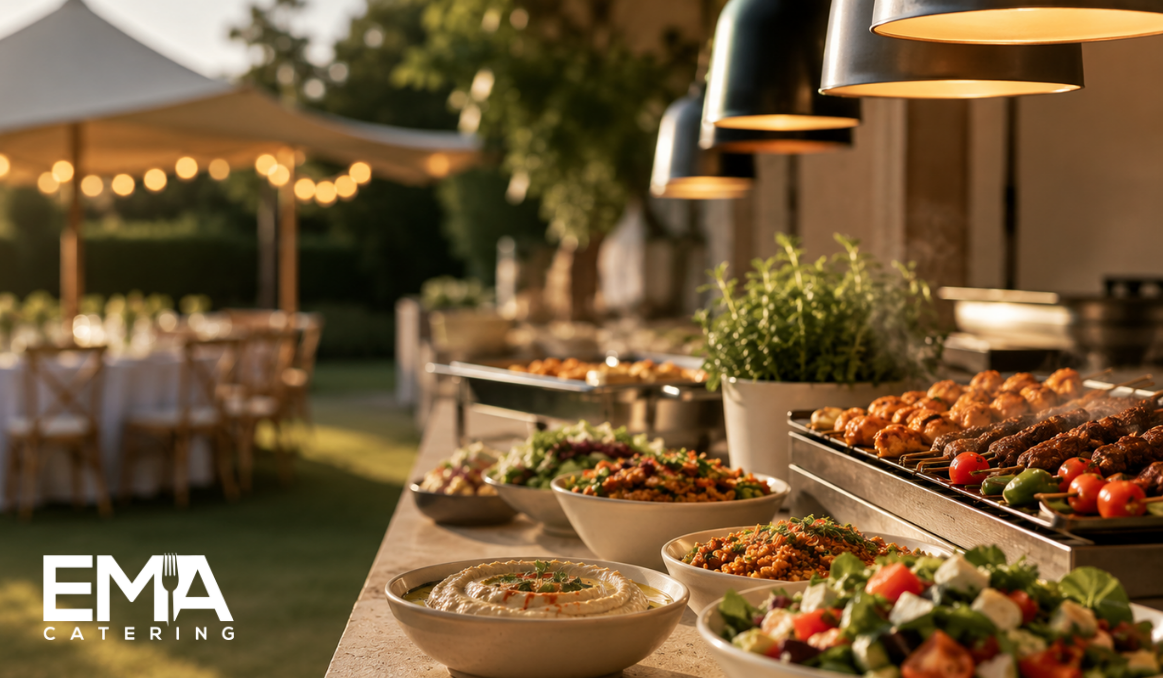
Type “best outdoor catering services near me” into a search bar and you will get a wall of five-star listings, glossy photos and confident promises. The hard part is not finding caterers. It is working out which of them can actually pull off your event in a field, a garden or a car park, in British weather, without anything going sideways. We have been doing exactly that since 1995, from intimate garden weddings to festival crowds of 5,000-plus, and the difference between a smooth day and a stressful one almost always comes down to a handful of things people forget to check.
This guide is the honest version. It is what we would tell a friend who asked us how to hire well. By the end you will know what separates genuinely good outdoor catering services from a nice website and a cheap quote, and you will have a checklist you can take to any caterer before you sign anything.
What “outdoor catering” really involves
Indoor catering happens in a building that already has power, water, gas, shelter, lighting and a loo. Outdoor catering has none of that guaranteed. The caterer has to bring the kitchen to the location and make it work safely, often off-grid, whatever the sky decides to do. That is the whole game, and it is why outdoor work is a genuine specialism rather than a normal caterer who happens to park outside.
Good outdoor catering services cover a wide spread of events. The common thread is that the venue is open air or semi-covered, so logistics, weather and self-sufficiency matter far more than they would in a hotel ballroom.
| Type of outdoor event | What it usually needs | Where people get caught out |
|---|---|---|
| Garden weddings | Elegant service, marquee, weather plan | Underestimating guest numbers and toilets |
| Corporate summer parties | Volume, speed, dietary range, branding | Queues that ruin the lunch hour |
| Private parties and BBQs | Relaxed menu, flexible setup | No wet-weather backup |
| Festivals and public events | Multiple units, high throughput, off-grid power | One unit trying to feed thousands |
| Sports and community days | Fast turnaround, simple crowd-pleasers | Power and water not arranged in advance |
How to judge an outdoor caterer near you
“Near me” matters more than people think. A local caterer knows the venues, the access routes, the parking quirks and the local council’s rules. They are also easier to meet, taste with, and hold accountable. But local alone is not enough. The best caterer for your event is the one that can prove they have done your type of event, at your scale, and can evidence the boring safety paperwork without flinching.
When organisers come to us after a bad experience, the story is almost always the same. The caterer was friendly, the tasting was lovely, and nobody checked the things that actually keep an event safe and legal. So check them first, before you fall for the menu.
The non-negotiables, with how to verify each one
| What to check | Why it matters outdoors | How to verify it |
|---|---|---|
| Food hygiene rating | Off-grid kitchens still must hit lawful standards | Search the FSA online register by business name |
| Public liability insurance | Open sites carry more risk to guests and property | Ask for the certificate, check cover level and dates |
| Allergen process | Legal duty under Natasha’s Law, protects guests | Ask to see their allergen matrix and labelling |
| Power, water and waste plan | Nothing works outdoors without it | Ask exactly what they bring and what you must supply |
| Wet-weather contingency | British weather is not optional | Ask what changes if it rains on the day |
| Relevant references | Outdoor experience cannot be faked | Ask for similar local events and contactable clients |
The legal basics every outdoor caterer must meet
This is where a quick check protects you. Every food business in the UK, including mobile and outdoor caterers, must register with their local authority, and it has to happen at least 28 days before they start trading. Registration is free, so there is no excuse for skipping it. You can confirm the rules on the Food Standards Agency website.
Registered businesses are inspected and given a Food Hygiene Rating from 0 to 5. The scheme now covers more than 430,000 UK food businesses, and the large majority hold the top rating of 5, so a strong score is the norm, not a luxury. Look any caterer up yourself on the FSA rating search before you book. In England, displaying the sticker is voluntary, so trust the online register rather than what is taped to a van.
Allergens are the other legal must. Since October 2021, Natasha’s Law has required food that is prepacked for direct sale to carry a full ingredients list with the 14 major allergens emphasised, and the FSA guidance for caterers spells out exactly what that means in practice. A serious caterer will have an allergen matrix ready and will talk you through how they avoid cross-contamination on an open site. If they cannot, keep looking.
Weather and logistics: the part people forget
Here is the question that tells you the most about an outdoor caterer in one go: what happens if it rains? The confident answer is specific. Covered prep areas, a marquee or gazebo plan, flooring for muddy ground, a menu that holds up if service slips by twenty minutes, and a clear split of who supplies power, water and waste. A vague answer, or an assumption that the venue “will have all that,” is a warning sign.
We made sustainability part of our logistics years ago, sourcing from HMC-certified halal suppliers and running a solar-powered Whitby Morrison ePower fleet, because outdoor events are exactly where clean, self-sufficient power pays off. When you compare outdoor catering services, ask how each one handles dietary range and environmental impact. In 2026, halal, vegetarian, vegan and allergen-aware options are a baseline expectation for a mixed crowd, not an upgrade.
| Guest numbers | Typical outdoor setup | What to prioritise |
|---|---|---|
| Up to 50 | Single unit or mobile kitchen, focused menu | Quality, personal service, simple logistics |
| 50 to 200 | Marquee catering point, small team | Flow, dietary range, wet-weather cover |
| 200 to 1,000 | Multiple service points, larger crew | Queue management and off-grid power |
| 1,000+ | Several branded units, dedicated field team | Throughput, restock and full site logistics |
Case study: a garden wedding that nearly got rained off
Here is one from our own diary, lightly anonymised at the couple’s request, because it shows what good outdoor catering actually looks like when the day does not cooperate.
A couple booked us for a 120-guest garden wedding at a private home outside London. The plan was a relaxed open-air reception with a halal-friendly sharing menu, drinks on the lawn, and a sit-down meal under a light marquee. Two days out, the forecast turned: heavy showers expected right across the afternoon service window. The kind of news that derails a wedding if the caterer is not ready for it.
Because we plan for weather as a default rather than a surprise, the contingency was already in place. We expanded the covered prep area, repositioned the service line so guests never had to queue in the open, and shifted the timeline so the sit-down meal landed in a drier window the forecast had flagged. The menu was built around dishes that hold quality even if service moves by fifteen or twenty minutes, so nothing suffered when we adjusted the running order. Our team handled their own power and water, so a soggy lawn changed nothing about the kitchen.
The result: guests barely noticed the weather, the meal went out hot and on time, and the couple told us afterwards that several guests assumed the rain plan had been the plan all along. That is the point. Good outdoor catering is not about hoping for sun. It is about being so well prepared that the weather becomes a detail instead of a disaster.
The lesson is simple and worth repeating when you interview caterers: the difference between a calm day and a ruined one is almost always preparation you cannot see in the photos. Ask about it directly.
Why choose EMA Catering for your outdoor event
EMA Catering has specialised in outdoor catering since 1995, from intimate garden weddings to festival crowds of thousands. Outdoor work is genuinely different, and we plan for it as a default: covered prep, marquee-ready service, and a menu and timeline built to flex if the British weather turns. Our team brings its own power and water, so a soggy lawn or an off-grid field never reaches the kitchen.
We are a family-run business with a strong food hygiene rating, full public liability insurance and a clear allergen process. We source HMC-certified halal meat and offer vegetarian, vegan and gluten-free options as standard, and our Turkish and Mediterranean menus are naturally inclusive, so a diverse guest list eats well together. With EMA Catering, the wet-weather plan is already the plan, which is exactly what you want from an outdoor caterer.
Questions to ask before you book
Take this list to every caterer you shortlist. The answers reveal more than any brochure.
- What is your current Food Hygiene Rating, and which council registered you?
- Can I see your public liability insurance certificate and cover level?
- How do you handle allergens, and can I see your allergen matrix?
- What exactly do you bring for power, water and waste, and what must I supply?
- What is your plan if it rains on the day?
- Have you catered this type of outdoor event locally before, and can I have references?
- What dietary options do you offer as standard, including halal, vegetarian and vegan?
- How many staff will be on site, and who manages set-up and pack-down?
If you would rather hand all of this to a team that already ticks every box, that is exactly what we do. You can explore our outdoor and event catering services, see events we have catered, or just tell us your date, location and guest numbers and we will come back to you within one working day.
The bottom line
Finding the best outdoor catering services near you is less about the prettiest website and more about evidence. Check the hygiene rating on the FSA register. Read the insurance certificate properly. Make them prove their allergen process. Ask exactly how they handle power, water and rain. And insist on references for your type of event nearby. Get those right and a local caterer with real outdoor experience will make your event feel effortless, whatever the forecast does.
Frequently asked questions
Q: What do outdoor catering services include?
A: Outdoor catering can include food preparation, mobile catering units or service points, staff, equipment, setup, service and pack-down depending on the event package. EMA Catering plans the operation around the venue, guest numbers and event requirements.
Q: Can EMA Catering cater for outdoor festivals?
A: Yes. EMA Catering promotes festival and public-event catering and has operated at major UK events. Event requirements such as footfall, service points, site access and menu should be confirmed during planning.
Q: Can outdoor catering work if the venue has limited power?
A: Outdoor events can require self-contained power and other site planning. EMA Catering states that its team brings its own power and water for outdoor work; the exact requirements should be confirmed for each venue.
Q: What happens if it rains during an outdoor event?
A: A professional outdoor catering plan should include a weather contingency covering prep/service areas, access, ground conditions and timing. EMA Catering states that it plans for UK weather as part of its outdoor catering operation.
Q: Do you provide halal outdoor catering?
A: Yes. EMA Catering states that it sources HMC-certified halal meat and offers inclusive menus. Confirm the exact menu and dietary requirements when booking.
Q: How far in advance should outdoor catering be booked?
A: For weddings, festivals and large summer events, early booking is recommended because dates and operational resources can fill quickly. Smaller events may sometimes be arranged with less notice.
EMA Catering is a London family-run caterer providing outdoor catering services across the UK since 1995. Halal-certified suppliers, a solar-powered fleet, and more than 30 years of getting people fed properly, whatever the weather. Get a quote.